




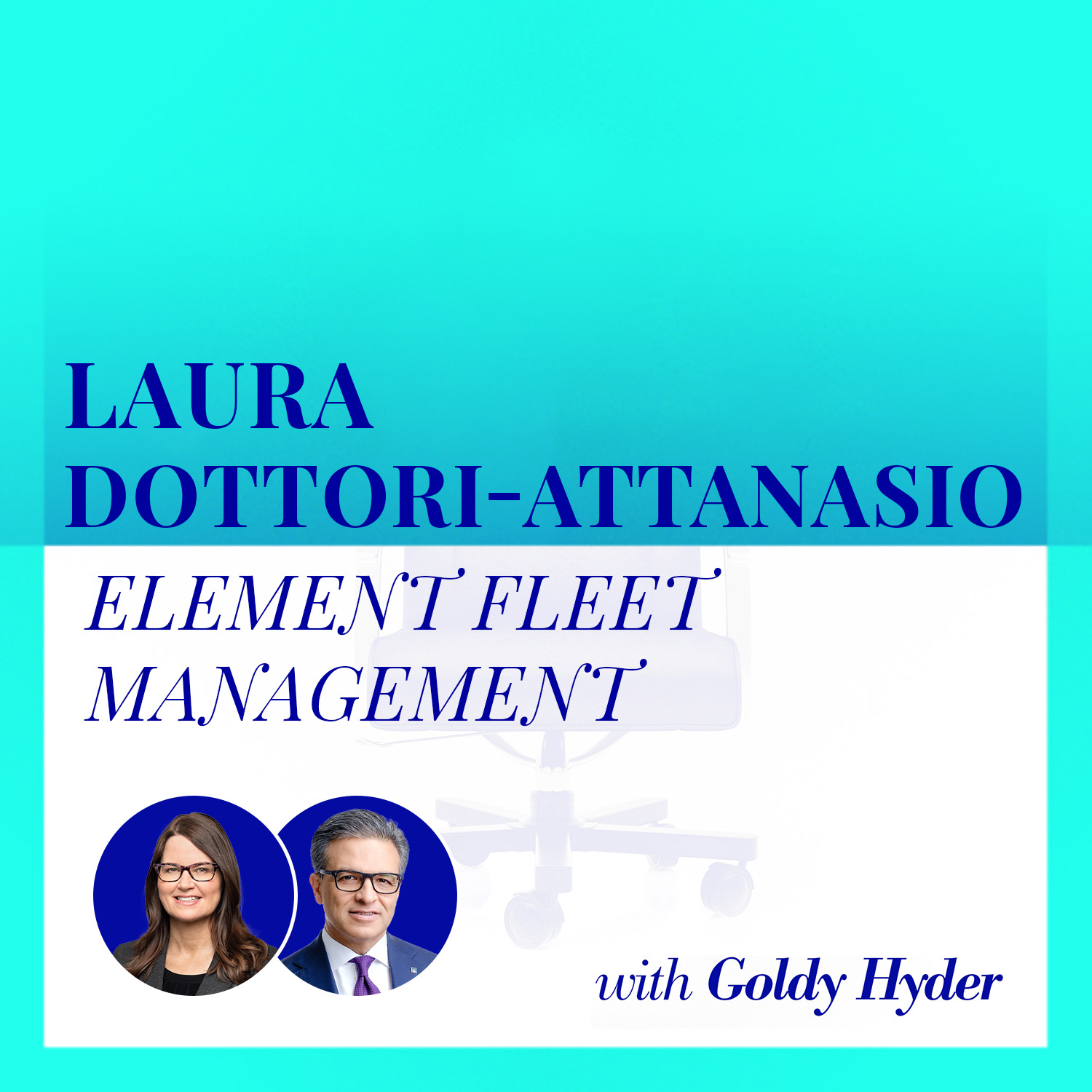
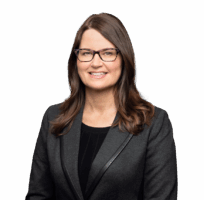
For Laura Dottori-Attanasio, growing up in a small Quebec town was a perfect training ground for a career that led to her becoming the president and CEO of Element Fleet, one of North America’s largest fleet management companies.
“You have to get to know the people in your community and you have to help one another out,” she tells Goldy Hyder on the Speaking of Business podcast. “You need to be resilient. You need to understand one another. You need to figure out how to collaborate to make things work for the community.”
In this episode, she discusses stepping into the CEO role after a decades-long career in the banking industry, and why the best leaders stay curious, adaptable, and willing to learn.
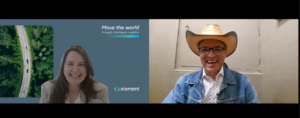
She also reflects on the importance of building workplaces where people feel they belong, and she and Goldy open up about the joys and challenges of being parents of people with special needs.
Tune in to Speaking of Business to hear Laura Dottori-Attanasio’s insights on leadership, AI, and what makes Canada strong.
Laura Dottori-Attanasio
I do believe in this country and around the world, we need more of that where people are taking the time to listen and to understand where people are coming from and their intention versus being too quick to judge, too quick to have an opinion, too quick to go to a decision.
Goldy Hyder:
Welcome to Speaking of Business, conversations with innovators, entrepreneurs, and leaders. I’m Goldy Hyder, president and CEO of the Business Council of Canada.
If you’re a longtime listener of this podcast, you’ll know that I’m fascinated by career journeys. Those in leadership positions rarely follow a straight line to the C-suite, but always it’s the lived experiences, the people and the lessons learned that shape who they become.
Take for example, Laura Dottori-Attanasio, the daughter of a forest products entrepreneur from Temiscaming, Quebec. Laura chose a different path from her dad and embarked on a long and successful career on Bay Street in the banking sector. And then a few years ago, a big shift; she left banking to get into transportation. She’s now the president and CEO of Element Fleet Management, one of the world’s largest companies offering fleet and mobility solutions.
What led to the move? How did banking prepare her to lead Element Fleet? And how did a Canadian transportation company become a dominant player in its sector?
Let’s find out.
Welcome to the podcast, Laura.
Laura Dottori-Attanasio:
Hi, Goldy. Thanks for having me.
Goldy Hyder:
Thanks for doing this.
Look, I mentioned in the introduction there that you grew up in a small northern town in Quebec. Tell me about how that helped shape who you are today.
Laura Dottori-Attanasio:
Absolutely.
So I was actually born in Timmins, Ontario, the home of Shania Twain, and grew up in Temiscaming, Quebec. So just outside of North Bay, Ontario, so border town. The Greater Temiscaming area had about 2,000 people in it. And so that is where I grew up with my family. So predominantly French speaking, large Indigenous community, and grew up there until I went off to university.
Goldy Hyder:
And you mentioned French, you mentioned Indigenous. A lot of those are major issues in our country. How has that upbringing helped shape the way you think about some of those issues?
Laura Dottori-Attanasio:
Well, I guess probably have a good solution if we could would be to move us all to small communities and have us live close to one another and have to exchange with one another.
And I’d say that’s been the biggest benefit to me growing up in a small community. You really don’t have a lot of alternatives. There’s nowhere to go. You’re limited in the number of restaurants, people that you know. You know, I went through school every year, the same 31 kids year after year after year. And so you have to get to know the people in your community and you have to help one another out. You need to be resilient. You need to understand one another. You need to figure out how to collaborate to make things work for the community.
You don’t have the luxury of like when you’re in a big city where you can just decide you’re going to do things on your own, you’re going to meet new people, do new things, make a lot of change. You are really in an environment with the same people, and you have to learn to appreciate what everyone brings to the table and you have to learn to tolerate different perspectives, differences, even if you disagree with them.
And so I do believe growing up in a small community that’s … You know, mine was relatively isolated; does make you more resilient and I would say more collaborative and accepting of different perspectives. And I do believe in this country and around the world, we need more of that where people are taking the time to listen and to understand where people are coming from and their intention versus being too quick to judge, too quick to have an opinion, too quick to go to a decision.
Goldy Hyder:
Look, I think this is just so important and so profound and yet so simplistic when you think about it. Be good to each other, do unto each other as you would do unto yourself. That kind of thinking.
Canada’s such a big country. You know, we’ve got these major cities. But then the vast majority of our country is rural.
By the way, that’s the same case for America.
Do you feel that we’ve actually made progress in bridging that divide between rural Canada and urban Canada to do exactly what you’ve said, which is try and listen to each other, try and understand each other, try and hear each other?
Laura Dottori-Attanasio:
No, I don’t believe we have. We would all have to lean in to understand different perspectives. And some of that is just being able to live it or experience it. So if I’m living in an urban area, have I ever gone out to rural Canada and to even spend a day or two or three days to get to know the people? Most people think they know what it’s like and judge from their apartment building and vice versa without ever taking the time to get to know one another or to really understand what the issues are that different people are grappling with.
Goldy Hyder:
There’s a lot of wisdom in what you’ve just said and it’ll help set up some of the conversation that I know we’re going to have.
And I want to go back again to when you decided to sort of leave the small town. You left, you went to study finance and economics, then you ended up in banking. And why? I mean, what attracted you to that sector?
Laura Dottori-Attanasio:
The truth is I had never set out or planned to be a banker. I don’t know that there are many children that do. My big plan was to be a veterinarian, and somewhere along the line when I realized there might be blood involved in being one, I realized that wasn’t going to be the career for me. From there I was going to be a lawyer, and then just as I was going through programs at university, thought, “Well, business and economics, that looks really interesting and I could go into business.”
And so I did that, and then when I left university, I decided that I was going to be an entrepreneur with my brother in our hometown; and quickly realized that we weren’t making money in our business venture. And I really hadn’t learned a lot at university, at least not anything I needed to be successful in a startup. I thought, “Well, I got to learn finance, so I’m just going to go work in an accounting firm, and then I can learn this and I can be more useful in the business.” Because I was going to do all the admin finance part.
Laura Dottori-Attanasio:
Anyway, I started working in an accounting firm. The business didn’t quite work out. My brother and I weren’t really compatible in business. And after having done about two years in accounting, I realized that this really wasn’t for me, that I wanted to do finance.
So I started applying for roles in banks and I got an offer from National Bank in Montreal back in the day. And I took that role on and I’ve just been incredibly fortunate, quite frankly, throughout the years to have had so many opportunities to learn different things, work with wonderful people and just work in all kinds of different areas, both at National Bank and then at CIBC.
Goldy Hyder:
Talk to me about that experience and how things have evolved over your career.
Laura Dottori-Attanasio:
How long do we have?
Banks are wonderful, wonderful training grounds.
Laura Dottori-Attanasio:
Banks are so broad, and because they’re so highly regulated with the first, second, third line of defence, when you’re in a bank, you learn how to do things really well. And if you don’t, there’s always someone that will remind you how well to do it. And so great learning opportunities. A lot of wonderful people like that are really good at what they do in so many different areas and complexities within a bank. So you can always be, I would say, learning and growing.
And I’m someone that I’m always ready to take a little bit of risk and to try new things. And so a lot of just putting my hand up to try different things; and then people, quite frankly, giving me the opportunity to give a few things a shot has helped; and just people giving advice, whether I asked for it or not. I found there were always a lot of people that either felt the need or wanted to share what they thought needed to be done better or differently for me to be successful, or they would share their own stories of their own experiences of what worked or what didn’t work.
And so I also got to learn a lot from other people. So without having to make some mistakes on my own, I found that a lot of people were really good at sharing their own learnings.
Goldy Hyder:
So you were in the career for how long in banking? How long was that period?
Laura Dottori-Attanasio:
A long time.
Goldy Hyder:
A long time.
Laura Dottori-Attanasio:
I think I spent about 30 years in banking.
Goldy Hyder:
And then one day you thought, “You know what I really want to do is I want to run a transportation company.”
Walk me through, how did that happen? Did you think about it? Did you say, “You know what? Why would I do that?”, or were you willing to take that leap?
Laura Dottori-Attanasio:
So when I first started in banking a very long time ago, as I said, it’d been a little more than 30 years I’d been in banking, I can remember in my first two years with the group of the folks I was working with, I had signed on a little piece of paper that I would only do two years in banking to get my learnings, and then I was going to go out and do my own thing. And I had a colleague witness it for me and I kept it on a little piece of paper. I think I still have that piece of paper that I kept in –
Goldy Hyder:
You call it The Broken Promise? Is that what you call it?
Laura Dottori-Attanasio:
That’s right. And I never left because I had so many wonderful opportunities to learn and to do things. I am a great change agent and I’ve had the opportunity to take on a lot of those different roles. And so in the, I want to say the last round before coming here, I always thought I’d like to do something different at some point in time. I think I’ve done almost every role one can imagine in a bank, and it just felt like the right time to try something different.
And so I was approached for this role. I knew of the company. I thought it was a very interesting company. Spent time with the previous CEO, Jay Forbes; wonderful individual.
And to be honest, and this is kind of funny in retrospect, but I can remember when I was first looking at the company and I thought, “My God, I don’t know. I might be bored in a month if I were to do this, because now I’m in this big bank with all these complex business units and big dollars and this looks like this small, easy, one line of business thing.” And in talking with Jay, he explained just how much more than that it was, and he was absolutely right. It’s been much more complex than I had expected it to be. And honestly, I’ve been here three years now; I’m still learning new things every day and it’s been just a wonderful experience.
Goldy Hyder:
For the listener, tell them, who’s Element Fleet? What is Element Fleet? What do you do?
Laura Dottori-Attanasio:
So we are a fleet mobility solutions company. Simply put, we look after the lifecycle of commercial vehicles. We help companies if they need to move people, product, packages, you name it, deliver a service, we help manage those vehicles for our clients. We help them optimize their vehicles or decrease their total cost of fleet operations.
That means if you need financing, we’ll do the financing; we’ll go out and buy the vehicles for you, advise you on what the right kind of vehicles are; do the upfitting, which means you might need your logo on it, racks, different tires, you name it. We do that; we do the titling and the registration, putting a license on the vehicle; we can give you all the services with route optimization so you know where your vehicles are at all times, the telematics; we do the remarketing, selling the vehicle at the end of its term, and we start that process all over again.
Goldy Hyder:
What’s the story of this company? Where did it start? How many people are employed?
Laura Dottori-Attanasio:
It’s a great story. Today we have about 3,000 team members. It got started with Steve Hudson, a great visionary who had, again, a great vision to bring essentially, I’ll give you the summarized version, but two great companies together. One was PHH and the other was GE Capital; take both of their vehicle leasing divisions. He brought them together to form a great Canadian company and grew that company.
Goldy Hyder:
Outside of Canada, right? The growth is outside of Canada as well.
Laura Dottori-Attanasio:
The majority of our business, you’re right, is outside of Canada. Surprisingly, Canada is the smallest segment of our business. So it’s mostly the U.S. followed by Mexico, Australia, then New Zealand, and then Canada.
Goldy Hyder:
I think many people would be surprised listening that how many Canadian businesses that’s the case, but it’s just simple math, right? We have only 40 million people. There’s only so much you can do.
Laura Dottori-Attanasio:
Absolutely.
So he had the vision to start this great company. It had gone through some difficulty from an operational perspective and had made one, I would say, poor acquisition and a very large one that almost cost the company its future. And at that time, Jay Forbes, a turnaround specialist came into the company and he managed to turn things around for the company, stabilize the company and set it back on stable footing so that it continued to grow.
And that’s when I came in for that phase of growth and for the phase of digitizing and automating. As we know, there’s a lot of disruption in the world today and-
Goldy Hyder:
Well, we’re going to get into that.
Laura Dottori-Attanasio:
And so I came for that lovely part.
I’d just say at the time, while that was all expected, it was perhaps not expected at the rate of change that-
Goldy Hyder:
Right. Yeah.
Laura Dottori-Attanasio:
… it’s going at today.
Goldy Hyder:
You may have just answered my next question, which is what surprised you when you got there? And I suppose it may well be the pace of change.
Laura Dottori-Attanasio:
Now, I do like a fast pace of change. I find that rewarding, challenging. And maybe this isn’t what should have surprised me, but just given the history of the company … But as you can appreciate, the company did go through a difficult time. And so like anything, when my predecessor was in, to save the day, you have to do tough things, make really tough calls. So cut costs and you have to cut deep usually, and then you stop investing because you need to stabilize and save your money for urgent things.
And so my surprise was probably the years of lack of investment, for good reason, had left the company maybe further behind from a tech perspective than I had expected when I first arrived. And you know, coming from banking where there’s some pretty old tech still sitting in banks, I was surprised by what I saw when I got here.
And so the level of rebuild required was not what I had anticipated until we started to go into the systems to do some work.
Goldy Hyder:
The story you just said, I have to tell you, I’ve heard from many CEOs across Canada, and I wonder what that says about us. Are we just comfortable? Do we feel the need to do more, go faster? We’re a pretty innovative society, but yet I hear these stories about how we’re slow to incorporate the new technology.
Laura Dottori-Attanasio:
This has been interesting in a company that does business in different countries. And I would say, and I’m generalizing of course, but Canada does tend to be … It feels less entrepreneurial and driven than perhaps other countries at least that we do business in.
And I sometimes wonder if that is because our largest employers and industries are banks, insurance companies, government; highly regulated utility type businesses. And so regardless of how fast you want to go, you do have to go at a certain pace due to the regulatory environment, which is always, again, to keep everyone safe.
And when you have a lot of that and they’re great jobs to have, you then tend to have less people that are entrepreneurial taking risk in the system. And so it does feel like things do move at a slower pace. There’s more aversion to risk.
Goldy Hyder:
Well, for someone who spent three plus decades in banking which is all about risk and risk management and risk tolerance and so forth, talk to me about how your experience in banking coming from that culture has helped or not helped you in being a first time CEO.
Laura Dottori-Attanasio:
It’s definitely helped across the board. As I said, great training ground. I’ve had the opportunity to see and to be a part of so many things, including at the executive committee level. So again, you get insight into how the CEO lives and how the CEO kind of owns every decision; notwithstanding a team might be making them, but the CEO gets to wear them.
So I’d say the bank is a great training ground, particularly for my time as Chief Risk Officer. It is, I have to say, a rather ungrateful job to do and it’s a tough one to do. And you learn that you got to be able to make some really tough decisions and make people unhappy either by saying yes to something or no to something. And when you are a CEO, you get the joy of making the final decisions that are going to make some people happy, others not, and you live and die by your decisions. You know, if you made a right one, that’s great. If you made a wrong one, then it’s your decision and you own it.
Laura Dottori-Attanasio:
And so I would say banking prepared me well for that.
And I also had the opportunity to sit on a public company board and some charitable boards where you also learn in those settings what it’s like to be a CEO from a board perspective, which I also found to be helpful once I arrived in this role.
But I should point out, and I’ll be forever thankful to my predecessor, Jay Forbes, but when I arrived, he and the chair of the board at the time, David Dennison, set up a transition plan. So we had three months together where we worked side by side in a transition plan where I actually sat alongside Jay, we went out to see all the investors and I just listened; watched him go, watched him do a quarter earnings call, the prep, the whole bit. Almost shadowing. And then when we went to the next one, just as he was about to go, then I took that one on.
And that transition period was super helpful to get real insight into the company, the culture, the decision-making. And it really helped, I think, from an investor perspective, ensure smoothness and transition where our investors didn’t have to worry that, “Oh my God, there’s a new person here. Who knows what they’re going to do relative to the other person that we knew well?” Because we spent time together to show that it was going to be an orderly transition.
Goldy Hyder:
Did you feel the pressure? Did you feel the shift from, you know, you’re on an executive leadership team, there’s someone else who’s going to make the final decision, and then that someone else became you?
Laura Dottori-Attanasio:
You know a lot of people say nothing prepares you for being the CEO? And honestly, until I was CEO, I probably scoffed at that a bit, but it is true. Nothing really prepares you for being in that role. And I’m very direct and I love when people are, and I love being on a team, and I always say we have to effectively challenge one another. And if I have an idea and it doesn’t make any sense, say something, let’s duke it out. I do get final vote, but I want to hear.
And you know, you sometimes think, “Okay, by saying that and people know you well enough, they’ll do it.” But the minute you’re in that role, all of a sudden people are thinking twice before they do effectively challenge and say things, notwithstanding how comfortable you try to make things. And that I believe as a CEO is something to continue to work at because you’re only as good as your team.
Goldy Hyder:
100%. 100%.
Laura Dottori-Attanasio:
And so it’s important that your team feel absolutely comfortable saying what needs to be said.
Goldy Hyder:
Well, one of those conversations that I suspect is taking place around your ELT, the executive leadership team table has got to do with the impact of innovation. How are you thinking about what’s happening and how is it going to make your business transition to this new world?
Laura Dottori-Attanasio:
So technology, AI impacting everyone. So we have that going, which I would say is a phenomenon affecting everyone.
Laura Dottori-Attanasio:
I’d also add in the automotive sector, it is a space … And Mary Barra, the CEO at GM, I think had said it best maybe two years ago, but she had said the automotive sector is going to see more change in the next five years than it’s seen in the last hundred years. And so it’s an industry that was already going to go through change. And I would just say with AI and a lot more focus on this industry, there’s just a lot happening.
And so gone are the days, although I think they were gone a while ago, where you could come in, make a few decisions, management changes, and then kind of sit comfortably for a two, three-year period. I think the pace of change is constant.
So we spent a lot of time, like we have had to go from being a very traditional type of business to really being much more tech forward. And so in order to move at pace, we made an acquisition of a tech company called Autofleet. So that allowed us to, I’m going to say, to move really fast to get a really cool tech platform that actually had AI in it when we acquired this almost two years ago that would allow us to actually build off of this tech capability with a solid team to allow us to move faster.
But we do spend a lot of time on, again, like everyone is doing, just putting agents into where we need to and just continuing to automate, digitize where we need to. And it’s all about offering, A, a better client experience. It’s what clients expect and we want to make sure that we’re delivering at or above expectation.
And so that is a big part of all of our worlds and we’ve all spent the time we need to on learning AI, creating our own agents to make sure we really do know what this means, and then to see how it can be value-added to our client base from a service perspective. And of course, along the way, it helps us be more efficient and maybe take some cost out of the system too.
Goldy Hyder:
So let’s talk brass tacks here because there is a lot of anxiety out in society that this evolution, this technological revolution is going to have potentially downside effects on employment, on jobs. And interestingly enough, the transportation sector comes up a lot because of the belief that these are all going to be automated vehicles in some capacity. How concerned should these people be? What does a transition for them look like? Because we’ve got to obviously have employment for these people in something else to do.
Laura Dottori-Attanasio:
Yeah, look, it’s a great question, and I’m not sure that anyone has the answer to it. Time will tell.
I do believe though we are going to autonomous vehicles, autonomous almost everything. You might’ve seen we announced our partnership with Waymo starting with managing their autonomous vehicles in San Diego. And so we have spent a lot of time in that space to ensure that we remain part of the connected vehicle for autonomous vehicles. So that is … Well, it’s here, it’s coming. It’ll just be a question of how fast does it go to come through the system?
With that efficiency, of course, you require less humans. And so personally, I would expect there will be job … We can say job loss or displacement. People will have to do different things. And I would say for the here and now is just make sure for people that they understand AI and that they know how to use it. Because if you’re aware of it and you’re using it, there’s less likelihood that you’re going to lose your job to it. And so your job you’re in might change, but it allows you if you know how it works and whatnot, to maybe migrate into something different.
Goldy Hyder:
Yeah, I think that’s so well said. I often say you won’t lose your job to AI, but you will lose your job if you don’t know how to use AI.
Laura Dottori-Attanasio:
Yeah.
Goldy Hyder:
I want to give hope to our listeners as well. The truth is all technological evolutions have led to more jobs, not less. They’re different. That means there’s a transition underway, and our government has recently announced a $76 billion program in trades. And so we have to think about it differently. And I know that Canadian leaders are doing that as they run their businesses.
Now, the other thing that Canadian leaders, CEOs in particular I’ve spoken with make a lot of time for is their community, is their society in which we live. And I know that you are personally very much involved in the charitable sector and I want to ask you about that. Like what motivates you? How do you carve up the time to do what you want to do?
Laura Dottori-Attanasio:
It’s really important to me. Again, growing up in a small town, the concept of community is really important. I do believe …
Look, to be a CEO, there’s a lot of hard work involved to move up in an organization. There’s also a lot of luck involved if we’re honest with ourselves too, being in the right place at the right time, right supports.
And I just think it’s really important that we give back to our communities.
So I’m big on trying to, I’m going to say level the playing field and allow everyone to have their shot at being successful for whatever success means for them. And so it’s important to give back, not just with money, but also with time, with advice, with sharing if it’s lived experience, to help people that want to be helped, if you will, realize their full potential. So really, really important.
Goldy Hyder:
Now speaking of helping, in 2019, you and your husband created an award for commerce students at the University of British Columbia. Tell me about that.
Laura Dottori-Attanasio:
We’ve been long-term supporters of the Children’s Aid Foundation where we participate in a scholarship program for children or youth that are at risk. Our son was lucky enough to get accepted at UBC, went to UBC, and we thought, “You know what? We’d like to show some appreciation.” My husband, Mark, went to that school, that we would like to do scholarships for kids that might not have the opportunity to go otherwise. And that’s how we started that program.
We just did one with IOT through the Canadian Center for Physically Disabled People. So we did something together with them. And so for us, it’s really important. Like education does help level that playing field and it allows people the opportunity to do things they might not have been able to without education.
Goldy Hyder:
Well, you and I are both parents of adults, children with disabilities, with developmental disabilities or otherwise. And I’ve often said to my daughter, “You’re one of the lucky ones,” because they’ve got you as a mom or me as a dad or my wife and so forth, but it’s not the same for everybody else. And I’m just wondering how is it that as a parent of someone with a disability, even though you’re able to provide, that you think about doing things for others?
Laura Dottori-Attanasio:
Very fortunate to have the means to provide. I think being aware of that and having the means though makes it that much more important because you live … Like you and I both know what it’s like that you do a bit more living day by day and worrying about the future when you’re not there, and you want to make sure that your child is well looked after. And so it’s thinking about what can you do today to help people that may not have the same means, for people that have a disability?
And it’s also recognizing, I would say, the ability in people with disability. Way too often, especially if you don’t have someone with a disability in your life, you feel sorry for people. And you see people, they look away, they’d rather not see it. They feel uncomfortable, they feel bad, where they should be going more towards it.
And I always like to look at not just people, but everything with, “Where’s the possibility in this?” Like my son might be intellectually delayed, but there’s still a lot of things he can do. And so I focus on, what can he do?
And it’s no different for typically developing people. If you focus on what people can do and really well, you can do so much more than if you spend your time focusing on all the little things they don’t do as well. Because no one’s perfect and no one’s ever going to be perfect, but if you focus on the positives and the things people do well, I just think as a society we could accomplish so much more.
And it just goes back to all of the diversity, inclusion, different perspectives. I don’t know about yourself; I get so many insights and learnings from my son with a disability because he sees life completely different than I do. That again just helps with how you think about dealing with issues to come up with solutions and whatnot. And I just think we’d all benefit from if we could all maybe spend more time there, lean in.
Like we’re merging two locations of ours in Toronto in September and we are going to have an area, like our barista bar, where we’ll be hiring people with disability. And those are things that we can do. So we’re creating jobs for people with disability. And I think, you know, we’re doing it. We’re a small company with 3000 team members. We’re going to do it in all of our locations starting with Toronto. Everyone has the ability that runs a business to give back to their community in really interesting ways that can allow people’s perspectives to change to allow us, I think, to do better things together as a country.
Goldy Hyder:
Well, thank you for sharing that. I think that’s just so important.
You know, a lot of times people call it disabilities and I know the community will say, “We just have different abilities.”
Laura Dottori-Attanasio:
Exactly. Yeah.
Goldy Hyder:
You know, the abilities are different.
And as a country, we have I think over 700,000 people with a declared disability of some sort, but they’re potential workers. They’re productive members of society. Nothing has made my daughter feel more of having a purpose than her job. That is the most important feeling for her, the sense that, “My sisters have jobs and now I have one as well.”
And so I think as a country, we have to think about how to utilize the labor force at a time in which despite all this talk about AI, everywhere I go, people are like, “I still need people to do things. I still need that labour.”
So thank you for sharing that story. It’s kind of a nice way to get to a place where I do like to ask the CEOs that I speak with, you know, when you think about Canada and what kind of a Canada we want our kids to grow up in, whatever their abilities, to grow up in, what’s your hope for them and for Canada?
Laura Dottori-Attanasio:
I would say that we continue being who we are. Canada is a wonderful, wonderful country, wonderful people. We have incredible diversity and inclusion, and even a sense of belonging in this country. We’re respectful of one another, accepting of one another. We all manage to kind of be our own people, but within a society that gets along in a respectful way.
And there’s all kinds of opportunity in this country. When you look at the richness that we have, not just in terms of what’s in the ground, our natural resources; our people, we have highly educated people, an incredibly diverse workforce. And as we know, with different perspectives, you can do a lot more with that. So I think we just keep doing what we’ve been doing.
And what I’d like to see us be able to do, and this is what I worry about, is if we could continue to have a really strong middle class and not have the haves and the have-nots. And if you look at the stats, you see the rich getting richer and the poor getting poorer, and we’re-
Goldy Hyder:
And the K economy, so to speak.
Laura Dottori-Attanasio:
Yeah. So we’re losing that middle class. When you start to get that, you start to see more violence, divergence of opinion. And back to where we started, no one’s meeting in the middle anymore and listening to different perspectives, and no one understands where other people are coming from. And that starts to lead to a lot of conflict.
And so we just have to keep sort of what makes, I’m going to say Canada great in terms of how wonderful we are at living together and listening to one another. That’s what our focus needs to be on.
And I think it’s even more important now given a lot of what’s happening in the world. There’s just a lot of hate, a lot of opinion, a lot of not listening. And we need to get back to where we’re active listening, and listening to intention, not just words, so that we can continue to be who we are and what makes this country great.
Goldy Hyder:
Well, I can tell you that people listening to this podcast have surely benefited from you, your sharing. It’s inspirational and I thank you. Thank you for it.
We do like to wrap up with a few rapid fire questions. And we’re taping here July 2026 and first week of July. So FIFA is going on. I’m just wondering, are you watching any of the World Cup?
Laura Dottori-Attanasio:
Yes.
Goldy Hyder:
And is there a favorite team?
Laura Dottori-Attanasio:
I love all teams.
Goldy Hyder:
Oh no, I’m not going to let you get away with that.
Laura Dottori-Attanasio:
With my Italian heritage, I-
Goldy Hyder:
I was going to say, they’re not even here.
Laura Dottori-Attanasio:
I was going to say. Yeah, I would’ve cheered for Italy, but they never made it and so …
Goldy Hyder:
They never made it. All right, I’ll let you go with that one.
Okay, favorite part of Toronto.
Laura Dottori-Attanasio:
You know what? It would be … I know it’s going to sound odd. Downtown, the lights in Young Street. From a very early age growing up in Temiscaming, I would watch MuchMusic and all the great things happened in Toronto. And it was like, if I could ever get to that big city.
And to this day, the office I have, I can see the CN Tower because we’re right downtown. And if I’m out at a dinner and I come back to the office to get my stuff, I turn off the lights, I still do it today, and I look out the window and I think, “Wow, I’m in this big city, and it’s a beautiful city.”
Goldy Hyder:
Small town gal struck it big. Well done.
Favorite part of Canada.
Laura Dottori-Attanasio:
Favorite part of Canada.
Goldy Hyder:
Yeah. Where do you like to go?
Laura Dottori-Attanasio:
I’m going to have to say Temiscaming.
Again, Canada’s a beautiful place. Again, natural resources, lakes, beautiful. Like to go home to go out on the lake, to go out into the forest on a walk is … Again, it’s a beautiful thing. Everyone must do it.
Goldy Hyder:
Now you mentioned MuchMusic. I watched that as well. I remember Erica M, the VJ, and all of that. So why don’t we end with the question, favorite music? What’s your favorite music?
Laura Dottori-Attanasio:
Oh my. Rap music.
Goldy Hyder:
Rap music. I did not see that one coming.
Laura Dottori-Attanasio:
I know.
Goldy Hyder:
Tell me more.
Laura Dottori-Attanasio:
Don’t know. How does that even happen growing up in a small town?
Goldy Hyder:
That’s my question. How does that happen?
Laura Dottori-Attanasio:
I don’t know. That’s a whole other podcast.
Goldy Hyder:
Yeah.
All right. Well, I like teasers.
Thank you so much for doing this, Laura. It’s been a fantastic conversation and we really appreciate the time, but also your leadership and the inspiration you’re providing Canadians.
Laura Dottori-Attanasio:
Well, thank you. And back at you with what you’re doing with the BCC and what you do for Canada is greatly appreciated, and it’s inspirational to watch you go. And you do it with incredible drive and heart, so thank you.
Goldy Hyder:
Laura Dottori-Attanasio is the president and CEO of Element Fleet Management.
Speaking of Business is a production of the Business Council of Canada. Our thanks to Will McIntyre and his entire team at Pop Up Podcasting for production help.
I’m here at the Calgary Stampede in case you’re wondering why I look like a cowboy.
And if you’re enjoying our Speaking of Business conversations with innovators, leaders, and entrepreneurs and you’re not already a subscriber, I encourage you to follow us or subscribe so you don’t miss any episodes. Search for Speaking of Business wherever you get your podcasts or go to our website at thebusinesscouncil.ca. Yes, it’s thebusinesscouncil.ca.
Speaking of Business is a production of the Business Council of Canada. Until next time, I’m Goldy Hyder. Thanks for joining us.

From energy demand to economic opportunity: Heather Chalmers, GE Vernova Canada
50 Years of Business Leadership in Canada: Leading with Purpose

Balancing Business and Social Mission: Zahid Salman, President & CEO of GreenShield