






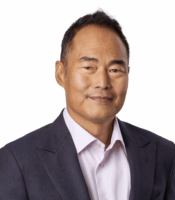
What does it take for a Canadian energy company to overcome geography and reach the fastest-growing markets in the world?
For AltaGas President and CEO Vern Yu, it involves a remote rail line and a deep-water port in Prince Rupert, B.C.
In a wide-ranging conversation with Goldy Hyder on the Speaking of Business podcast, Yu recounts how the company become a global export powerhouse, growing Liquefied Petroleum Gas (LPG) shipments from 25,000 to 130,000 barrels a day in just a few years, with plans to scale up even more once a second facility is built.
Today, AltaGas’s Prince Rupert facility accounts for a significant amount of Canada’s annual exports, driving economic growth across Alberta, B.C., and the broader Canadian supply chain.

Yu also shares why long-term partnerships with Indigenous communities have become essential to building projects that last and why Asia represents the biggest opportunity for Canada’s energy future.
Listen to this episode to see what’s possible when Canadian energy thinks globally:
Vern Yu:
The reality is people need affordable energy. They need reliable energy. We want to have more climate friendly energy over time. And without that energy, basically people are in economic poverty.
Goldy Hyder:
Welcome to Speaking of Business, conversations with innovators, entrepreneurs and leaders. I’m Goldy Hyder, president and CEO of the Business Council of Canada. A few weeks ago I was in Asia for the ASEAN and APEC Summits. In all my conversations with business leaders and government officials, it was clear that Canada has much to offer this growing and dynamic part of the world. Just think about our agricultural wealth, our critical minerals, and our abundant energy.
The question we often wrestle with, however, is how do we get our products across the ocean to willing customers? My guest today has an answer for that. Vern Yu is the president and CEO of AltaGas. Through innovation and outside-the-box thinking, the infrastructure company has managed to deliver Canadian energy to Asia and it’s currently growing its export capacity to reach even more customers. How do they do it and what can other Canadian companies learn from that experience? I’ve come to the headquarters of AltaGas in downtown Calgary to find out. Welcome to the podcast, Vern.
Vern Yu:
Great being here today, Goldy.
Goldy Hyder:
Let me establish for our listeners that we’re speaking the day after the federal budget, Mark Carney’s government’s first budget, described as transformational and one for the ages and so forth. Did it meet that moment? Did it meet that high bar it set itself?
Vern Yu:
Well, that’s a great question, Goldy. I think on my first impression of it was that it’s a little bit short. We’re dealing with is, in Canada, is we’re stagnated with economic growth and we need to compete globally and it’s becoming obviously harder to compete globally. And in my business, the energy business, we have fierce competition around the world and we have some of the toughest regulatory processes here in Canada. We have a lot of red tape and we have tax policy that’s not as competitive as other jurisdictions. So if you look at it from our lens, is our biggest competition in Canada for energy exports is the United States. The United States is the biggest exporter of energy in the world, and we want to get our fair share of that pie and our policies are behind, so there’s more to do.
Goldy Hyder:
Well, you mentioned the changing global environment which we’re operating. You were born and raised in Canada, from Winnipeg, if I remember correctly. Canada, we had a pretty good run. Do you think what got us to this place is sufficient to get us to where we need to go? And if it isn’t, what do we need to do differently?
Vern Yu:
Well, the first thing we need to do is we need to be proud of our resource sector. It is the biggest contributor to Canada’s global exports. It’s about 25% of total exports, and I think most Canadians don’t know that. I think, obviously, in Western Canada we’re very aware of the role that the energy business plays in the Canadian economy, but in central Canada, I think that’s lost to the people there and we need to promote that. And the fact if we have a very prosperous energy business means that we’ll have a prosperous Canada. We had that in the 2010s and we’ve lost that over the last decade.
Goldy Hyder:
Well, the world’s certainly a complicated place. I’ll come back to that, but I want to pull back to your own story to get some context here. I mentioned you’re born in Canada, but your parents immigrated here. Tell me the family story. How did you end up here?
Vern Yu:
Well, my parents were displaced from China in the late 1940s with the communist revolution. They ended up in Taiwan. And from there, they were lucky enough to get a good education and a university education. And then in the early 1960s when North America was opening up for Asian immigrants, both my parents got an opportunity to go to grad school in North America. My mom went to the U.S. My dad went to Saskatchewan, went to Saskatoon, got a master’s degree in engineering at the University of Saskatchewan, and my family ended up in western Canada, first in Winnipeg, then Regina, then in Calgary in the early 1970s. And we have prospered here in Calgary. We’ve been part of this growing, vibrant city and we’ve had tremendous opportunities for me and my siblings.
Goldy Hyder:
You mentioned the education your parents received. You, yourself, began your career as an engineer and soon after, you completed your MBA in Toronto. What inspired the path that you pursued here? Obviously engineering as a background helps, but how did you end up doing what you’re doing?
Vern Yu:
Well I, as any young person, you’re kind of pushed in a direction by your parents. I grew up in the energy business in Calgary. There was a lot of opportunity when I was in my 20s here and I ended up in Ontario for school, started working out there and then ultimately got a degree in finance and came back to Calgary because there was more opportunities in the mid-90s in Calgary than there was in Toronto. So from that point in time, never looked back.
Goldy Hyder:
Now you spent three decades, I think, at Enbridge, and then I’m assuming you got a call and you explored the opportunity here. Is that how it came about?
Vern Yu:
Yeah, I think I was lucky. I had a great run at Enbridge. When I started there, the company had a market cap of $3 billion. When I left, it had a market cap of $120 billion.
Goldy Hyder:
Wow.
Vern Yu:
So I got to work with a lot of great people and learn a lot of things. I had a lot of great mentors, but when I was into my 30th year at Enbridge, I had pretty much done everything there was to do. The board of directors of AltaGas, wanted to make a change at the CEO level, and I thought that this was a great opportunity to try something new and round out my career and just in another, different direction.
Goldy Hyder:
But it’s a big leap, right, suddenly becoming CEO responsible for the company, responsible for shareholders, for employees?
Vern Yu:
Yeah. I think even if you’re on the executive team of a big corporation, you think you know what it’s like to be CEO. But until you’re actually-
Goldy Hyder:
And you don’t until you get it, do you?
Vern Yu:
Until you actually do the job, you don’t realize how alone you are …
Goldy Hyder:
Bingo.
Vern Yu:
And how you’re the last line of defence on everything that happens. So it’s a big responsibility, but it’s also a great challenge.
Goldy Hyder:
It’s the most common answer. I’ve felt the same way. First time, I’d be, where did everybody go? What did I do differently today that I didn’t do yesterday? But that in that loneliness, of course, you learn a lot more about yourself.
Vern Yu:
Yeah.
Goldy Hyder:
Talk to me about your leadership journey. What have you learned as a CEO?
Vern Yu:
I think the biggest thing I’ve learned is you have to bring people along. You can’t just assume they know what you’re thinking. Oftentimes what things that are very obvious to you may not be obvious to others, so you have to sit down, explain to the team, if we’re going to go a certain direction, why that decision has been made and what were the pluses and minuses of doing that. And then collectively say, gather everyone up to move in that direction and make sure that we are measuring our progress each and every day on whether we’re getting to where we want to get to.
Goldy Hyder:
There’s a sense out there that’s unfortunately developed, and I blame social media for a big part of this, but if it’s good for business, it’s bad for me. What does business need to do? What do leaders need to do to lean in and lift people up and work together?
Vern Yu:
Our job as a business is to grow people, to give them more opportunities, encourage our employees to give back to the community, encourage our employees and our company to actually be a good member of society. So one of the things as an infrastructure company that we have to do, which is not unique among businesses, is we have to be a good neighbour. We move a dangerous commodity thousands of miles across oceans, over mountains, in very busy metropolitan cities, and we have to do that safely, reliably-
Goldy Hyder:
Everytime.
Vern Yu:
100% of the time. So we have to be a good neighbour, and by being a good neighbour, you put a face on your company. It isn’t just this black box. And that’s how I think we have to get people to understand that we’re here servicing people so they can have a better life. And yes, we make some money while we do it, but our business is delivering affordable, reliable, and climate-friendly energy to people around the world.
Goldy Hyder:
So let’s pick up on that. Tell us the listener, your footprint, where do you sell to?
Vern Yu:
So we have two main businesses. One is a U.S. business. We own four different natural gas utilities. We service customers in Michigan, the District of Columbia, Maryland, and Virginia. So we provide energy to close to two million households each and every day that heats their homes, allows people to have a hot shower to cook their food and live a quality life. We also have a very significant Canadian business where we’re exporting Canadian LPGs to Asia. Today-
Goldy Hyder:
LPG, again, letting the listener know.
Vern Yu:
Oh, sorry. That’s liquefied Petroleum gas, which is really propane and butane. And propane’s the stuff that heats your barbecue and butane is a product used in chemicals and refining.
Goldy Hyder:
Now I was with you. You and I were together in the White House earlier this year and the way you landed that message that says, “All the way from Calgary, we light up 7,000 federal government buildings,” does that feel pretty good to you?
Vern Yu:
Well, it’s a unique thing that a Canadian company provides the energy that keeps the White House warm.
Goldy Hyder:
So as you know, we’re having a bit of an issue with our neighbours. In business, of course, you’re agnostic about those things. You go to where the customers are. How are you feeling about where we are? It’s November 2025. We’ve got hopefully a review and renewal of the USMCA on the horizon. We continue to have some issues, but Canadians are still pretty emotional, pretty upset. The elbows are not quite down just yet, but how do we get through this period sensibly, as we look forward?
Vern Yu:
Well, I think the key thing that I’m taking away from this is we had a very cozy life the last 50 or 60 years, where our biggest trading partner was our neighbour, and it was a very collegial relationship.
Goldy Hyder:
Life was good.
Vern Yu:
Yeah, life was good. It was a great relationship.
Goldy Hyder:
In fact, it was good enough.
Vern Yu:
Yeah. And I think we, as a country, got a little lazy. We didn’t have to have the most competitive trade policies. We didn’t have to have competitive tax policies. We didn’t need to stimulate productivity. We could just sell to the global elephant, and life was pretty good. The U.S. is obviously going through a different phase, where it’s very inwardly focused and looking to recreate its manufacturing base, and we, as Canadians, need to pivot to that reality and we need to, number one, get rid of our own provincial trade barriers. The fact that you can’t bring wine from B.C. to Alberta, to me, is a little crazy-
Goldy Hyder:
Well, it gets worse than that. Think about the first aid kits you have to prove comply with new provincial regulations and lighting on vehicles, tire sizes. It truly is something I find very rich, when premiers complain about Donald Trump’s tariffs, and we’ve been putting them on Canadians for decades.
Vern Yu:
Absolutely. And I’ve heard from people it’s harder to sell to Ontario than it is to the U.S.
Goldy Hyder:
You mentioned the customer base is not just in the United States. It’s also very consistent with the diversification policy of this government. But long before, I’m sure you were at it before that, how did you diversify? How did you end up effectively, as I understand and tell us this story, but you created the market for your product in Asia.
Vern Yu:
Asia is a net importer of energy. And what keeps Canada from being truly a global player in energy exports is our geography. It is the challenge of getting our product, which is in either northeast B.C. or in Alberta to tidewater and AltaGas, in 2019, had a great idea. So instead of using pipelines, why don’t we use the railroad? The railroad’s already there. All we needed to do is load the propane on rail cars. Then we need to find a port, and the people back then were able to find an ideal spot in Prince Rupert. And since 2019, when our Ridley Island Propane Export Terminal opened up, we started with exporting about 25,000 barrels a day of propane to Asia. Today, we’re doing about 130,000 barrels a day. By 2027, we have plans in place to do 250,000.
Goldy Hyder:
The demand’s endless at that end.
Vern Yu:
Yeah. Asia imports 3 million barrels a day of propane.
Goldy Hyder:
Why not Canadian?
Vern Yu:
It’s a huge market. It’s a huge opportunity for us.
Goldy Hyder:
Why was Prince Rupert the right place?
Vern Yu:
It is a deep water port.
Goldy Hyder:
Is it deepest in North America, if I-
Vern Yu:
It’s the deepest water port in North America and it has significant rail access to that port.
Goldy Hyder:
So I believe there’s a desire to see it double. Why?
Vern Yu:
Yeah. We’re building an expansion right now. It’s called the Ridley Island Energy Export Facility. It’s going to start up in 2027. It’s going to add 80,000 barrels a day of exports. We have the ability over time to grow that to 500,000 barrels a day. So we have this huge opportunity in front of us to materially change our trade balance. So what we do today on about 125,000 barrels a day, that’s $2.5 billion a year of exports to Asia. By 2027, we’ll be doing $5 billion a year. So to put that in some context, Canada exports $500 billion a year. Our little facility is doing 10%.
Goldy Hyder:
Wow. Now it goes without saying, I’m assuming these create more jobs every time you start producing more and selling more.
Vern Yu:
Yeah, absolutely. There are more jobs because there needs to be activity in Alberta to load the trains. There’s more activity in northeast B.C. to load the trains upstream of that, there’s processing plants and fractionation, there’s pipelines, there’s drilling. And then at the port, we have more rail offloading, ship loading, and then that drives global activity in Korea, Japan, and China.
Goldy Hyder:
And your provider’s CN, right?
Vern Yu:
Yes, it is.
Goldy Hyder:
Yeah, so they’re hiring as well to meet the demand.
Vern Yu:
Absolutely.
Goldy Hyder:
So growth is good. It’s not bad, for the record. What advice would you give to just Canadian companies that you’ve said, rightly, that it’s been pretty comfortable, pretty good run. Many of our companies have been global, in fairness, particularly service providers have been, or those in service industries, but now Asia in particular saying, “Sell me your stuff. I want your oil. I want your gas. I want your uranium. I want your potash. I want your rare earth. I want your critical minerals. Just get me more.” Fastest growing part of the world, soon to have a third of the world’s middle class. What advice do you have for those other Canadian companies who perhaps have either just looked south or looked inside Canada? What does it take to take that leap across an ocean, into unknown territory and grow your business?
Vern Yu:
It’s no different than sales of anything. You need to meet people face to face. You need to get out there and tell your story. What I tell the people who sell our product is “you got to wear out the shoe leather.” You got to get out there. You got to shake hands. You got to talk to people, and you got to let them know what you have and why it’s of benefit to them. So whether you’re selling propane or you’re selling a widget, you need to make sure that the customer knows who you are and why it’s in their best interest to buy your product.
Goldy Hyder:
One of the areas where tremendous progress seems to have been made, particularly with energy companies, is with Indigenous partners. How do you see where we find ourselves today and the opportunities that represents?
Vern Yu:
That’s a great question, Goldy, and that’s near and dear to my heart. Historically, energy companies approached First Nations and U.S. Indian reservations in a very transactional manner. Hey, if we’re going to come through your community, we’ll pay you some money. Let us come through your community and then we’ll go away. And I think the Indigenous people felt that was a little disingenuous. We interrupted their lives, we have assets on their territory, but it was very transactional. We need something from you. Here’s some money. What I learned in my career was, when I was at Enbridge, I was running the crude oil business. And that pipeline basically runs from Zama, Northwest Territories to Houston, Texas. It’s the longest pipeline, oil pipeline network in the world. And we were trying to build a new pipeline in Minnesota, the Line Three replacement, and we were stuck.
The governor didn’t want to give his approval. There were some First, or as, in the U.S., you call them U.S. tribes who weren’t super interested in working with us. I was lucky enough to go down to the Fond du Lac nation and walk the pipeline right away with the chairman of the tribe. And he showed me some areas where we weren’t the best neighbour, where we weren’t doing things that, perhaps, were in the interest of that nation. So we had a long talk. We, at Enbridge, changed how we were going to route the pipeline. We listened to the feedback we got from the tribe, and then ultimately that tribe decided that it was in their best interest to work with us. And they went to the public regulator and testified on behalf and for the pipeline. And ultimately, that’s how we got the pipeline approval.
And then that made me realize that, hey, we’re going to be partners with these people forever. We need to be economically aligned. They need to feel like they own a piece of this. When I got back from that trip and worked further in my career at Enbridge, we came up with the idea that all of the pipelines in Alberta should have First Nations ownership. And in 2023, we did a deal where 23 different First Nations got to own 10% of the pipeline network. AltaGas has been doing similar things, where we don’t just pay for being there one time. We make sure that we offer training and jobs for the First Nations where we touch them. The more product we move through their traditional territories, they get a royalty payment each and every day. And the next thing we need to do is to make them an equity partner in our projects. So that’s the next step. And I think what that does is if you’re a good neighbour and you’re aligned, you both win as the company grows.
Goldy Hyder:
Doing good has always been good business, hasn’t it?
Vern Yu:
Absolutely.
Goldy Hyder:
I want to go back to your time in Enbridge, and you were clearly a part of the Northern Gateway project. Everybody, I think, knows how that story ended not very well, and nothing’s really been built without being nationalized since. TMX is an example, although obviously Coastal GasLink and a few other things are coming online, we hope, soon. LNG Canada is there. But there must be lessons learned from that. When you look back at that, what do you think could have been done differently and what can we do now, going forward, to prevent something like that happening again, where effectively a government retroactively canceled an approved project?
Vern Yu:
Yeah, that is the biggest challenge for infrastructure in Canada. As a private company, you have not enough certainty that you can get through a regulatory process in a reasonable amount of time and not run the risk of political interference, even if the regulator gives you its approval. So Northern Gateway was approved by the Canadian Energy Regulator and effectively then killed by the liberal government. And Enbridge wrote off half a billion dollars of-
Goldy Hyder:
By the way, did it not enjoy support of the Indigenous groups on that route of the pipeline?
Vern Yu:
Yes, it did.
Goldy Hyder:
Isn’t that the most shocking thing? You got the consensus and the “social license” that you needed, and yet this was the outcome.
Vern Yu:
And that’s why it’s hard to build the infrastructure in Canada. There isn’t certainty that if you do all the right things, you will still get a go and that, it’s unfortunate. That’s just the way that our society has been set up, that we’re too worried about the loud squeaky wheels. Like our Ridley Island Energy Export facility took seven years to get permits, and it’s right beside the existing operating facility, and we have buy-in from all of the First Nations along the route. Even something less controversial takes way too much time.
Goldy Hyder:
Do you feel like there’s a moment here where, finally, the facts can be introduced in what it takes to get energy out of the ground and move to markets that are operating coal plants around the world?
Vern Yu:
The reality is people need affordable energy. They need reliable energy. We want to have more climate friendly energy over time. And without that energy, basically people are in economic poverty. We’d all take this energy for granted to keep our houses warm, to keep us cool in the summer, to drive around, fly on an airplane. So there needs to be a more nuanced discussion about what are we prepared to give up? What can we do, as a society, to meet all of these different goals?
And for me, the thing that we don’t ever talk about anymore is energy conservation. We all want to drive these big SUVs. We all want to live in 5,000 square foot houses. Is that really necessary? And if we just roll the tape back to the 1970s, and when we’re talking about energy efficiency as a big way to fight the energy insecurity that the U.S. has, that is something that needs to be on the discussion framework and that’s completely missing today.
Goldy Hyder:
One of the questions I’ve been asking CEOs these days with the emphasis on AI is how is AI affecting their business? Is it having any impact in your business? Do you see it having an impact on your business?
Vern Yu:
We see a direct impact, just on the demand for our product. What’s happening in the U.S. and globally is there’s an AI arms race, and that arms race is about having enough data centres to providing the computing capacity for all this AI. And the linchpin to a data centre these days is energy. And because we’re in the energy business, we see customers come to us and ask us, “How can I get this huge amount of energy that I need to put a data centre in place?”
So if you think about what the hyperscalers are trying to do, so Meta, Alphabet and all the others, they’re all talking about wanting to have, in the next five years, 10 gigawatts each in data centre power to enable their data centres. I think New York City, on a peak day, uses five gigawatts of energy. So we’re talking about the energy for 20 New York cities, just from these five companies. This is a game changer for the energy business. And then for AI as a whole, there’s so many possibilities because we are an information-heavy business, where we need to be safe and reliable each and every day and data enables us to be safer and more reliable each and every day. There’s tons of possibilities in front of us.
Goldy Hyder:
Now, earlier we talked about the courage leaders need today. You did something I’ve actually not seen, at least not recently, and that is you put out a LinkedIn post during the municipal election that was happening here in Calgary to elect a new mayor and to elect councilors and so forth. And you took to social media and you basically urged people to vote in a very personal message, why did you do that?
Vern Yu:
We live in democracy and you look at, every election, whether it’s a federal election, a provincial election, or a municipal election. And quite frankly, the voter turnout of all of these elections is terrible. And then because the turnout is low, fringe interest groups get a disproportionate say in the outcome of the election. So because of voter apathy, in my mind, we see this bigger polarization each and every year in democracy. I think most people are in the middle. Most people want central type policies, where you work with both sides of the argument to come up with a compromise that is reasonable.
And the past election in Calgary, we saw extremely low voter turnout. We saw a city council that was deeply polarized. We saw that special interest groups were really running our city. And I felt like it was important, as a leader in this city, to tell people, “Hey, if you don’t go out and exercise your democratic right, you’re going to get more of the same, where the special interest groups run our city.” We have, in my mind, one of the best cities in the world, but we’re not looking after that city. We’re too busy worrying about minorities of people, wherein the broader group of Calgarians want a safe and efficient city.
Goldy Hyder:
My father likes to say Canadians are people of the radical middle. Why did we cross the street? To get to the yellow line, as the saying goes. Now, you and I both talked about our kids. A lot of what we’re doing now is really for our kids and setting them up for inheriting a Canada that’s hopefully stronger than the one that even we got. What’s your hope for them as you look forward?
Vern Yu:
Well, I hope that they have the ability and desire to stay in Canada. What I worry about is if we don’t have the right policies and rules, people who are ambitious, people who want to do better than their parents will feel like they need to move somewhere else to live out their dreams. And we’ve seen such a difference in our economic policies between Canada and the U.S. We’ve seen that brain drain for many, many years now. And my hope is that we can turn that around, so we can make companies like AltaGas, great global companies that are based in Canada.
Goldy Hyder:
Well look, it’s been a great conversation. I want to end on a lighter note on a couple of fronts. First of all, you’re an avid cyclist. You’ve been riding in the Enbridge Tour for Alberta for Cancer. Tell me why you do that.
Vern Yu:
I’ve been an avid cyclist for probably 30, maybe 40 years now. It happened that a good friend of mine, in 2009, was diagnosed with cancer and he said, “Hey, I’m going to do this bike ride to raise money for cancer research because I’ve seen all these things that need to be done with cancer and we can really make a difference if we can get some more funding for research.” So that summer, I trained him up because you were supposed to ride about 250 kilometers over two days.
Goldy Hyder:
Wow. Where’d you ride?
Vern Yu:
Just south of Calgary, in the foothills.
Goldy Hyder:
And that put you at the border, basically? 250 south.
Vern Yu:
Well, you’re getting out there. And he had never ridden a bike before. So I trained him up on what kind of road bike to buy, how much training you needed to do, and then I said I’d do it with him. And so I sent out an email to my friends, asking them for donations for this cancer fundraiser. Much to my surprise is one email, I raised $10,000. And from that I got all these emails back with stories about people’s families that had been impacted by cancer and why they were so happy that I had asked them to donate to my ride.
And then the year after that, I was asked by the people running the event, “Would you help organize it for the next year?” And I said, sure. And at that point in time, I asked my employer, Enbridge, if they would sponsor it. And then Enbridge ended up sponsoring the ride across Canada in Alberta, Ontario, Quebec, and B.C. The event, over time, has been going on for 17 years now. It’s changed names in some of the jurisdictions, but it’s raised over half a billion dollars.
Goldy Hyder:
Half a billion?
Vern Yu:
Yes.
Goldy Hyder:
Wow.
Vern Yu:
And we’ve raised $110 million in Alberta. And when I came over to AltaGas, we started a team here and I’m super proud of our folks. In two years, our little team has raised over $1 million and we started with two riders the first year. In our third year, we had 125. So it’s great how our company has embraced this weekend, one weekend in the summer to try to make a difference for everybody here in Canada and across the world.
Goldy Hyder:
Well, I think it’s a proof point of the good-hearted nature of Canadians, but also reminder to all of us that we can get a lot done together.
Vern Yu:
Absolutely.
Goldy Hyder:
All right, well look, the hardest part of the podcast is right now. This is the rapid-fire questions and we’ve got a few lined up for you. Tell me the best place to cycle in Calgary.
Vern Yu:
Cycling from Banff to Lake Louise.
Goldy Hyder:
That’s God’s country, that is. Good answer. I like that answer. Favorite sport to watch?
Vern Yu:
I’m a die-hard Calgary Flames fan.
Goldy Hyder:
And is this the year?
Vern Yu:
Absolutely not.
Goldy Hyder:
Can we get past the Oilers, at least?
Vern Yu:
I don’t think so.
Goldy Hyder:
You may have lost some of our listeners on that one. Favorite place to visit outside Canada?
Vern Yu:
Tuscany.
Goldy Hyder:
Favorite food?
Vern Yu:
For me, Italian food.
Goldy Hyder:
Italian food. Best way to spend a day off and relax in your free time?
Vern Yu:
Either a bike ride in the mountains or watching my kids play sports.
Goldy Hyder:
What do you like to do outside of cycling?
Vern Yu:
I am an avid reader and I’m a closet comic book nerd.
Goldy Hyder:
Comic book nerd. Now we have to explore that. Favorite comic book?
Vern Yu:
That’s a tough question. The Avengers.
Goldy Hyder:
The Avengers. Is there a favorite superhero of yours that I can wrap up on?
Vern Yu:
How about Iron Man?
Goldy Hyder:
Iron Man. All right. Well that seems fitting. You are an Iron Man, given the cycling that you do, and you’ve been a great sport here. Thank you for doing this with us.
Vern Yu:
Thanks for having me, Goldy.
Goldy Hyder:
Vern Yu is the President and CEO of AltaGas. Speaking of Business is a production of the Business Council of Canada. Our thanks to Mark Tabilon of ZRM Studios for production help with this episode. And as always, Will Mcintyre and the team at Pop Up Podcasting. If you would like to hear more of our Speaking of Business, conversations with innovators, leaders and entrepreneurs, why not subscribe to our podcast? Search for Speaking of Business wherever you get your podcasts, or go to our website at thebusinesscouncil.ca/podcast. And yes, it’s thebusinesscouncil.ca, and please leave us a review. We’d love to hear from you. Until next time, I’m Goldy Hyder. Thanks for joining us.
From Small Town to the C-Suite: Laura Dottori-Attanasio, Element Fleet Management

From energy demand to economic opportunity: Heather Chalmers, GE Vernova Canada

50 Years of Business Leadership in Canada: Leading with Purpose